
Five New Google Search Tricks
| Tweet |
|
At GenealogyInTime Magazine, we are always on the lookout for new and innovative ways to help people search for their ancestors. This article addresses five radically new approaches to Google search to help you find your ancestors.
1. Google Encrypted Search
Google changed their privacy policy to standardize privacy across some 80 different products and platforms. The net result of the standardization, however, is that they have reduced their privacy settings to a lower common denominator. They did this to allow different Google applications to share information about the user.
For example, information from Google+, Chrome and from Gmail is now being used to affect your Google search results. One of Google’s ambitions for doing this is to customize search to the specific user.
If you use Google to search for your ancestors, this recent privacy change is going to have a negative impact. In particular, your ancestral search results will also be distorted. This can be illustrated by a simple example. Two different people sitting at two different computers performing the same Google search for the same ancestor will now get different results.
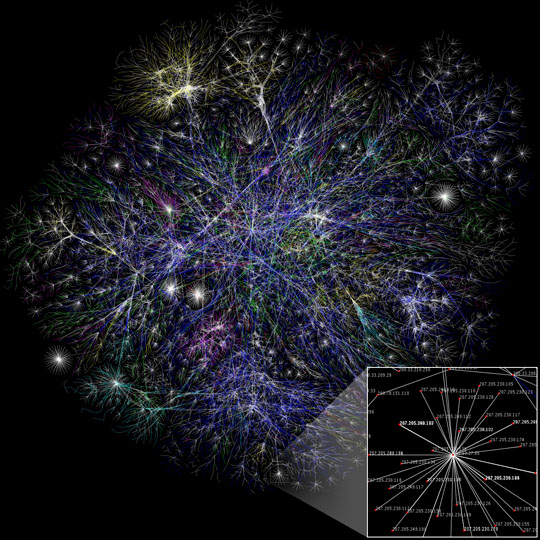
Ancestral records tend to cluster at the distant corners of the internet (see image below). The net effect of the Google privacy changes is that search results will now be pushed towards current content closer to the core of the internet and away from historic archived material at the periphery, which is where genealogists want to conduct their searches.
Why would Google do this? Because Google is a general search engine. Most people want core search results, such as how to find a good restaurant or where to buy a car. These account for over 60% of all searches. People searches only account for 8% of all searches. The bulk of people searches are for celebrities and for living friends and family. Ancestral searches for dead people are just a tiny sliver of that 8 per cent.


