

Recording Old Dates in Genealogy
When recording old dates for genealogy, you can enter either a Julian date or a Gregorian date provided that you carefully record which calendar is being used. Alternatively, you can convert old Julian dates to the Gregorian date equivalent and enter the Gregorian date into your records, with a notation that it is a Julian date converted to a Gregorian date. When you are uncertain whether the date is a Julian date or a Gregorian date, then this should also be noted. This is a common occurence when finding records using the Genealogy Search Engine.
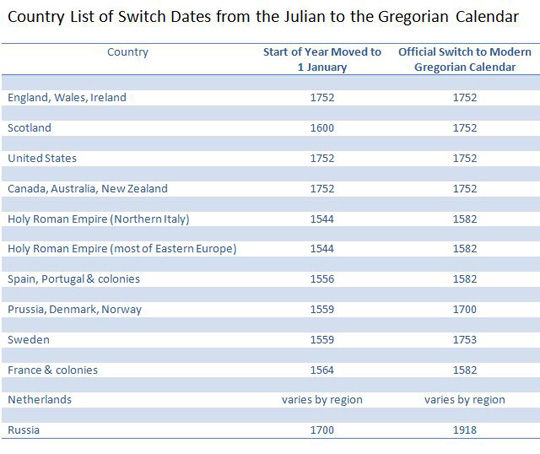
This table provides a handy reference showing when major countries moved to 1 January as the beginning of their calendar year. It also shows when they officially converted to the Gregorian calendar.
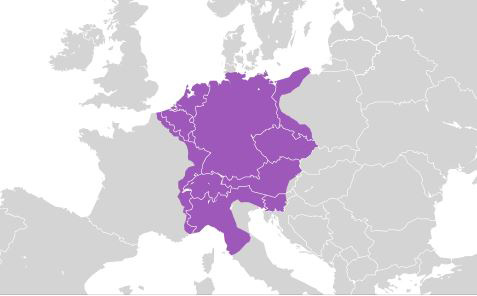
The map shows the extent of the Holy Roman Empire (mentioned in the table above) in 1582 when Pope Gregory XIII issued his papal bull to change the Julian calendar.


